

Blog
Blog

Healthy Healthy Campers

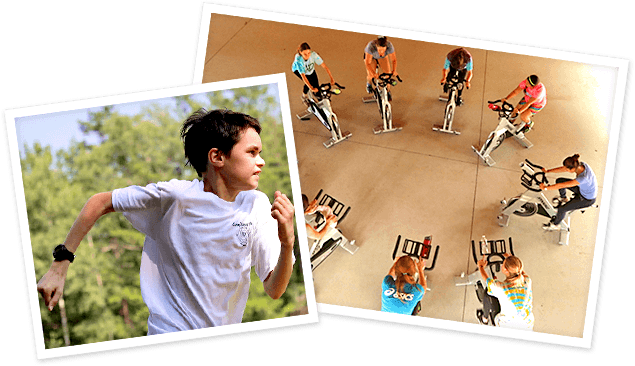
We all have great memories of physical accomplishments achieved in the Realm. From taking the courts for a fierce win against West End, to surviving one of Jamie’s Abs Classes, to successfully summiting Mt. Washington, many of us come home from the summer sporting hard-earned RH Dog Tags which we now wear with pride.

We understand the importance of exercise and activity, and know that sound nutrition further enables these physical feats.

According to a recent article on NPR.org, “Children around the world are less aerobically fit than their parents were as kids”. In addition, it goes on to explain that children today take 90 seconds longer to run a mile than kids did 30 years ago and children’s aerobic fitness has declined by 5% since 1975. Weight and body mass index have also increased.

So what’s changed since the 1970’s? Well, a lot has changed, but when it comes to the physical activity of children, one of the biggest changes has been the global presence/invasion of computers, internet access and video games. A stagnant lifestyle with little to no aerobic activity has been the consequence.

But this is not the case at Camp Robin Hood.

We are a health-minded leadership team that leads by example. We participate in (and lead) many of the activities, encouraging and celebrating campers and staff alike every step of the way in their physical endeavors. Nutrition is also a big focus in the Realm. Food is plentiful with ample choices, but unbeknownst  to many of the campers, it’s fantastically healthy. Fruits and vegetables are abound at all meals, meat is lean and whole grains are dominant. Nothing is fried, and sugary treats are offered typically just once a day. Hydration is also strongly emphasized. We fuel our bodies well to support the active culture we have created.

Good health extends past food and nutrition. We have a smoke-free camp, sunscreen is applied liberally and often, and sleep is valued. To ensure that our staff is well-versed on our health philosophies, we screen them before hire to ensure they are active and health-oriented, plus they receive a thorough training on this topic during pre-camp orientation.

Want to know what kinds of things we do at camp?  Check out our lengthy and amazing list of camp activities.

What do you think about this current health trend? What are you or your children’s favorite camp activities? Don’t forget to LIKE Camp Robin Hood on Facebook and get the inside scoop on Camp Robin Hood year-round!

How to Prepare Your Bags for Camp

Tis the season to begin preparation for your child’s next camp adventure!

As the anticipation mounts, it’s especially important to ensure your camper is prepared as possible for their stay away from home. All the amenities your child has handy around the house will not be as readily available at camp unless they complete that one all-important, oft-neglected task: plan ahead in packing their bag.

Here are some tips to ensure your camper’s bag is up to par come departure time:

  • As camp approaches and your child goes throughout their daily routine, encourage them to pay attention to the things they use so they know what to pack. The last thing we want is stressed-out parents running around last-minute, trying to think of things their camper may have forgotten.
  • Make a list. This may sound rudimentary, but you’d be surprised how many people fly by the seat of their pants when it comes to packing and then forget what they put in the bag and what has yet to go in. Make a list and then check items off as they disappear into the labyrinth that is your camper’s bag. Organization is key!
  • Categorize your list. This makes it easier not to accidentally pass things over in one long running list. Suggested categories include clothes, outdoor gear, and toiletries.
  • Download our suggested packing list to double-check for items that may be missing from your camper’s pack.

The One All-Important Thing You Must Not Forget!

The most common mistake we find with packed bags is that they are not labeled with names or group names.

It is essential for all parents to write in big, dark letters the name of their child and the name of their group on all packed bags.

In addition, the packed bags (that you label) should be soft trunks or duffel bags – this will accommodate for limited storage space at camp.

All campers traveling to camp via airplane or bus need to ship their bags via Camp Trucking, a delivery service like UPS and FedEx that services the entire country plus Canada. Camp Trucking is much more affordable than these other carriers and will pick the bags up from your home and drop them off at the end of the camping session.

We hope your camper is as excited as we are for new and exciting experiences this summer! Just remember: the organized camper is a prepared camper, and the prepared camper is a happy camper.

For more information on camper baggage and preparation, in addition to Camp Trucking sign-up forms, check out our camper baggage instructions.

How to Make Your Child a Happy Camper

We are looking forward to welcoming your child to Robin Hood this summer! We imagine he or she is experiencing all sorts of emotions as travel day approaches, as you probably are too!

Hopefully, the predominant feelings are those of anticipation and excitement; but, it’s also natural to be apprehensive and a little nervous about a few issues including the incidence of homesickness. It’s important to establish the distinction between “missing home/parents/pets/friends” and “homesickness” as they are in fact different.

It is normal to miss people and things we love while we are separated. While at camp, your child will certainly miss you – that is expected. However, he or she will be able to have great fun and be fully involved in camp life despite that.

Homesickness, however, is a condition akin to anxiety or depression in adults, and is a result of lack of security. It is a lonely feeling to which there seems no end.

While in the home environment, your child lives within a ‘safe circle’ – he/she is surrounded by people and things that are familiar and comfortable, including rules and routines. When a child comes to camp, they are stepping out of that safe circle into an unknown world – the people are unfamiliar, the rules are new, and the surrounding environment is drastically different.

But there is a safe circle at camp complete with wonderful and caring counselors, great friends, a beautiful setting and endless fun. The homesick child is the one who is struggling to let go of the ‘home’ safe circle and transfer to the ‘camp’ safe circle. He/she is in that ‘no mans land’ in between the two. We are determined to build that safe circle around your child as soon and as seamlessly as possible.

We will:

  • Show we care – by empathising with them, and offering our love and support.
  • Keep him/her busy and involved – focussing attention on the fun things that they are doing and will be doing.
  • Help them cope letting them know their feelings are normal, and offering strategies and advice on how to feel better.
  • Give special attention to him/her at ‘vulnerable’ times (e.g. rest time, bedtime)
  • Keep YOU informed of how he/she is progressing

During our staff Orientation we spend time discussing homesickness and the various methods of combating it.

The vast majority of children cross that zone between the two ‘safe circles’ with little problem.  Some children, especially returning campers, are virtually in the camp safe circle before they get here!

Prevention is better than cure…

Through our own experience and supported by studies, it is evident that most homesickness can be prevented.  If your child is well prepared for camp then transition can be seamless and exciting.

A well-prepared camper is one who:

  • Has experience sleeping away from home/in company of others.
  • Has been involved in and supports the decision to go to camp.
  • Knows about the camp, some of its people, its facilities and basic routines.
  • Has parents who show pride and confidence in their child’s ability to rise to the challenge of camp.
  • Has parents who may be anxious and worried about how THEY might cope with the separation, but do not let their child be aware of these anxieties.
  • Knows that his/her counselors can and will help in times of need.
  • Knows that low feelings associated with separation are normal.

Here are some tips and advice on how YOU can help to ease the transition in the few weeks prior to camp, and also during the first few days of camp.

  1. If it is going to be a first time sleeping away from home, arrange for your child to sleep over at a friend’s house, or even have friends sleep over at your house – have everyone sleep on the basement floor, or even in the yard! Create a ‘mini-camp’ at home!
  2. At the end of this article is some basic information about the Robin Hood routine. If they haven’t seen the Robin Hood DVD, sit down and view it with them. One of our counselors or older campers will be in touch with your child (if they haven’t already!) to help prepare them for camp.  Encourage them to reply with questions.
  3. Be positive – let them know how proud you are that they are setting out on this adventure, and how you share their excitement.  Discuss the fact that there might be ‘low’ times when they feel sad.  Emphasise that they can always talk to their counselor if they feel sad; that the counselor knows plenty of special ways to make them feel better, and that it is perfectly OK to feel low sometimes.
  4. Avoid the ‘get out clause’: “If you don’t like it, you can come home.” This can be amazingly damaging, and actually sends out some confusing and counter-productive massages.It undermines your confidence in your child’s ability to cope with adversity. It questions whether you really are ready to send your child to camp.Your child will be quick to use it, even when the smallest things go wrong, and you will have the choice of either carrying it through, or backing out of it; both of which will be extremely stressful. Make it clear that whatever period they have signed up for will be seen out. After that, they can make the decision on whether or not to return, or even extend their stay.
  5. As camp time approaches, YOU will become anxious. Try not to transmit that to your child.  Don’t emphasise the fact that you will miss them while they are at camp.  This may sound harsh, but the message here is avoiding the emphasis on missing them.  Support words like “we will miss you so much” with “but we will be so proud and happy that you will be having so much fun making friends and learning new skills.”
  6. If you can, avoid long, protracted goodbyes, whether you are dropping your child at airports, buses or bringing them to camp.  The longer it takes to say goodbye, the more anxious your child becomes, and actually he/she is picking up on YOUR anxiety during this time.
  7. After camp begins, you will be anxious to know how well your child has settled. Feel free to call DC or Jamie, or any of the administration.  We will be happy to let you know how he/she is doing.
  8. We discourage verbal contact between you and your child, particularly if they are having problems adjusting.  We have found that phone conversations with parents create a ‘virtual’ home safe circle that is very short-lived, and in fact makes the problem worse. This is why we have a ‘no phone calls’ policy for the fist two weeks.  Both you and your child will find this tough, but it will make that “I am happy and having a great time” phone call so much more special when it comes!
  9. Be wary of that tear-stained letter pleading for you to come and pick them up. Three or four days will have elapsed since the writing of said letter, and it is highly likely that things will have markedly improved in the interim.  Feel free to call us just to make sure!  When you reply to such a letter, make sure the emphasis is on how proud you are of your child, and how you understand how it must have been difficult to adjust.  Encourage your child to let you know in their next letter about the activities/friends/counselors etc.

There is no magical cure for homesickness, but we will work together to make your child a genuinely happy camper. Indeed we have many existing campers (and staff!) who were miserable for the first day or two of their Robin Hood lives, who have been returning ever since.

The polar opposite of homesickness is ‘campsickness’, and yes it really does exist!  It’s when a camper struggles to return to the ‘home’ safe circle after camp finishes.  Parents of seasoned campers will know exactly what I mean.  In a bizarre sense, our aim is for a camper who experiences homesickness at the beginning of the summer to experience campsickness at the end of it!

“The Talk”

Heading into our last week at camp, it is time we had “the talk.” The topic is: Camp Sickness. Yes, it is true. We warn you the majority of your campers will surely exhibit symptoms of this Realm-old illness. Watch signs include: crying, sad demeanor, loss of appetite, and random dancing at meals. While we assure you the symptoms will dissipate, a sure-fire cure is to encourage your camper to stay in touch with their camp family. We have emailed you the 2012 Camp Directory already (and it can also be found online under “Forms and Documents” on your CampMinder Account).  However, the best medicine of all is to enroll your camper for Summer 2013!

Sweet dreams from the Realm.

New Electronics Policy at Camp

We have spent much of the spring debating whether or not we should change our Electronics Policy.  We have weighed the benefits and cons of banning ALL electronics vs. allowing some.  After thorough research and relevant conversations, we even inspired an article that has just been released by Bob Ditter!  Bob is a well regarded child, adolescent and family therapist from Boston, Massachusetts, and is a nationally recognized trainer and consultant working with organizations that work with young people. Here is Bob’s article:


Plugged or Unplugged: The Benefits of Each at Camp
Reprinted with permission of the author, Bob Ditter. ©2012

I just got off the phone with the very thoughtful and reflective Jamie Cole, one of the owner/directors of Camp Robin Hood in Freedom, New Hampshire. She wanted to know my thoughts about a new policy the camp has been considering for this summer regarding the use of electronics at camp. I say the “thoughtful and reflective” Jamie Cole because she is balanced in her thinking about the issue of electronics at camp. On the one hand, camp is all about community and being with other people, not about “tuning out” by playing electronic games or being distracted by the seductive features of electronics. On the other hand, not all electronics are created equal! As Jamie points out, and as many camp professionals have themselves witnessed, listening to music on a an mp3 player, for example, can have a soothing or calming effect on many children, depending on the type of music being played. In addition, for many children, taking a “break” from the give-and-take of a cabin or group can have a calming effect on them, allowing them to “hold it together” and helping them be more successful when they are more fully engaged with peers.

So the question is, to remain plugged or be unplugged? Let’s look at the arguments, after which I’m going to make two practical suggestions.

One of the arguments about allowing electronics at camp is that children today have become so immersed in electronics that their devices are “like the air they breathe, the water they drink, and the food they eat” (Lewin). Taking all electronics away from campers might actually cause an increase in their anxiety levels in ways that could be detrimental to their adjustment at camp. While this hypothesis would be hard to prove, what is clear from recent research is that the rates of depression and anxiety are between five and eight times higher among children today than fifty years ago (Twenge). According to Peter Gray, anxiety and depression in children increase when they feel they have less control over their lives. With the increased pressures of school, loss of free time, and little time for spontaneous, creative play, Gray points out that the incidence of anxiety and depression in children has risen steadily. I myself have seen increasing numbers of children at camps throughout the United States who simply have no down time during the school week. They run from one scripted activity to the next, getting home to do homework before tumbling into bed, then repeating the entire scene day after day. For these children, having some “down time” at camp can be extremely beneficial, not only to individual campers, but to their peers and their counselors!

At America’s Camp, the camp for the children whose parents were lost in planes and the Twin Towers in the September 11th attacks in New York, directors Jed Dorfman, Jay Toporoff, Danny Metzger, and Beth Griffin had a place for children to “drop in” when they needed downtime or needed to “chill.” Having seen the impact of this “quiet zone” firsthand, where campers could draw, play quiet games, sit on stuffed chairs or even nap with stuffed animals, it was hard to imagine how some of them would have fared at camp without the soothing effect this down time. While electronics were not a part of the offerings in the quiet zone at America’s Camp, they easily could have been. I have a patient in my psychotherapy practice who is diagnosed with attention deficit disorder and who is prone to impulsive outbursts, and he routinely uses his portable video game device as a way of maintaining greater self-control over his moods and behavior. At camp, when he doesn’t have access to the “decompression effect” of his video gaming, he can become annoying and irritating to other campers and staff alike. He has even come close to jeopardizing his ability to remain at camp.

So my first suggestion is that camps seriously consider including an elective activity called “Quiet Time” as a legitimate, non-punitive “time out” for over-scheduled children! It can easily be set up in such a way so it doesn’t become an avoidance of things like clean-up or other duties, or for activity periods campers are simply trying to get out of. As I have noted, for many children, it can be the difference between what allows them to regulate their impulses in such a way as to be able to remain in camp at all. “Quiet Time” also gives staff a break from such children in ways that may allow them to be more patient over the long haul.

The “chill out” room: cards, board games, jacks, stuffed animals, puppets, drawing materials, quiet music options, stuffed chairs, and comfortable places for kids to “chill!”

My second practical suggestion goes back to the question, “To unplug or plug?” What if you let the campers decide? What if campers had to develop a “code of honor and respect” where they laid out all the considerations for behaviors with regard to responsible use of electronics? My experience has always been that when children want something badly enough and they are given the opportunity to create appropriate rules to govern what they want, they rise to the occasion. Each cabin would create an “electronics club,” where maintaining ones status as a “member” in the club (the EC) hinged on keeping the agreements. With help from counselors, it would be very easy to identify that code of conduct. Certainly it would have to address when and where electronics could be used, which would never be as an avoidance of making friends or fulfilling duties in their cabin or group. The games or other content (music, videos, etc.) would have to be appropriate and open to supervision by staff. All members would be required to respect other kids’ property (asking to borrow something FIRST, and accepting “no” for an answer gracefully!). Certain types of electronics might be out of bounds (for example, smart phones or any device that connects to the Internet) because it would take you away from what you came to camp for, which is to be with and make new camp friends.* Violating the agreement in any way means losing your member privileges for a specified period of time.

Giving campers a say in the policies regarding the use of electronics at camp would promote responsible behavior. It gives campers more of a sense of control over their lives at camp and gets them involved in creating reasonable policies and agreed upon consequences. All this happens while providing for the soothing effect limited electronics use can offer without compromising the essential premise of camp — which is to be on your own away from parents, make new friends, and have new experiences. Sounds like a win-win!

References

Gray, P. (2010, January 26). The dramatic rise of anxiety and depression in children and adolescents. Freedom to Learn. Retrieved from www.psychologytoday.com/blog/freedom-learn/201001/the-dramatic-rise-anxiety-and-depression-in-children-and-adolescents-is-it

Lewin, T. (2010, January 20). If your kids are awake, they’re probably online. The New York Times. Retrieved from www.nytimes.com/2010/01/20/education/20wired.html.

Jean Twenge, et al. (2010). Birth cohort increases in psychopathology among young Americans. Clinical Psychology Review, 30, 145-154.

Weir, D. (2011). Unplugging at summer camp: Social skills children develop on- and offline. Student thesis.

*Dan Weir also argues that children never get a break from the social pressures of school like they do at camp because at home they go online and are right back into the social mix!

Come For a Summer, Stay For a Lifetime